Spunbond

In automotive manufacturing Class A components are things like mirrors, headlights, door handles, tail lights, and other parts with smooth, polished finishes that are easily scratched or damaged. These parts are often packed in special plastic containers that are fitted with protective dunnage to hold each part securely to protect them from damage.

A common type of dunnage used with automotive parts is made with nonwoven fabric that is formed into a grid of individual pockets. This fabric can also be laminated to corrugated sheeting, such as Coroplast, which is then assembled into a protective grid. Individual parts fit into the grid pockets, and the entire assembly fits into a sturdy, returnable plastic container (RPC). The end result is a reusable closed-loop packaging system.

TPC provides both the nonwoven fabric alone or laminated onto Coroplast sheeting. We are an IATF 16949-certified provider committed to continuous improvement, waste reduction, and defect prevention in the automotive industry. We are also ISO 9001 certified.

Find out more about our spunbond nonwoven fabrics and how TPC supports manufacturers in the automotive industry.


Our Spunbond Nonwoven Fabrics for Class A Dunnage

Tyvek

TPC’s spunbond nonwoven fabric is made from colored polyester or polypropylene with a permanent posterior adhesive. Polyester spunbond materials provide superior strength, thermal stability, and moldability, with flat and point bonds available in weights from 12 gsm to 300 gsm or heavier. Polypropylene spunbond materials are cost-effective and softer.

Ultimately, using these nonwoven fabrics provides products with a reusable solution to protect against scratching, mold, mildew, and moisture buildup. It’s also nonabrasive, clean, and free of lint, with ample durability and compatibility for nearly any application.

Types of Materials

Brushed Polyester

We offer several types of nonwoven fabric:

  • Tyvek. This fabric has very fine, continuous, and nondirectional fabric fibers of high-density polyethylene (HDPE). Tyvek is suitable for many Class A automotive parts, including metallic, molded plastic, painted, and chrome products. It is easy to clean and resists moisture buildup.
  • Brushed polyester. Brushed polyester can be laminated with a polyvinyl chloride (PVC) backing. This material works for Class A parts made with leather, vinyl, chrome, and painted materials, with the exception of high-gloss materials.
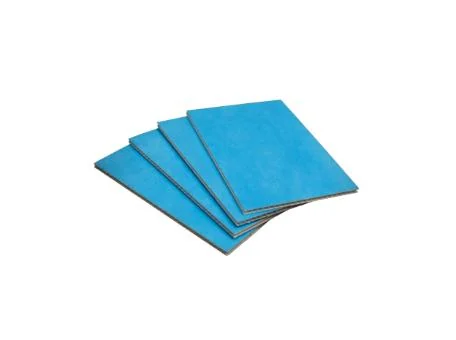
  • Spunbond. Our spunbond materials come in many colors, including white, grey, black, and light blue.

The Benefits of Sourcing Nonwoven Materials From TPC Converting

There are several advantages to working with TPC Converting for Class A dunnage materials, such as:

  • Short lead times. Many of our materials have short lead times, which means we can prepare them for your application quickly.
  • Custom converting. We can slit, cut, and trim nonwovens to custom dimensions and laminate it.
  • Edge stitching. In this process a strip of brushed polyester, Spuntex, Tyvek, or PVC is folded around the edge of the sheet and stitched in place. This further protects auto parts from damage when loading or unloading from the dunnage grid. Edge stitching is suitable for sheet materials up to 6 mm thick.
  • Edge sealing. This is a technique for sealing edges along or across flutes, forming round and smooth edges to prevent potential injury to workers while loading and unloading parts. This option is suitable for materials between 3.5 mm and 10 mm thick.
  • Samples available. We offer material samples so you can feel, test, and inspect the fabric in person when choosing among options.

Partner With TPC Converting for Class A Dunnage Nonwoven Materials

TPC Converting provides high-quality nonwoven fabrics for Class A dunnage applications. We carry a range of material types and colors, and our state-of-the-art converting and laminating equipment makes it simple to obtain the single- or multi-layer material you need in a range of sizes.

Contact us today to learn more about the materials we offer and our converting capabilities, or for guidance on finding the right material for your requirements.